


Page, Holbrook detox centers to close
By Bill Donovan
Special to the Times
WINDOW ROCK, Nov. 28, 2011
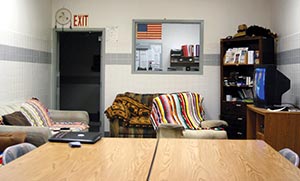
(Special to the Times - Krista Allen)
The Page Rural Substance Abuse Transitional Agency will close its doors at the end of the month because it lost its funding.
"We usually get two or three exposure deaths a winter here," said Page Police Chief Charlie Dennis. "This year we may see as many as 15."
Joe Wright agrees.
Wright is director of Encompass Health Services, which runs the Page Rural Substance Abuse Transitional Facility, proving beds for intoxicated people, mostly Navajo, who are picked up by police.
The facility provides a place for them to sleep and stay out of the cold until they are sober.
"I would hate to see us go back to 1996 when there wasn't a place here for people to go," Wright said, adding that in 1996 the city recorded 13 exposure deaths.
The Page detox center is one of two facilities serving Navajos that are on the verge of closing. The detox center in Holbrook, Ariz., also is closing its doors, he said. Repeated calls to that facility were not answered.
In both cases, the reason is a loss of funding.
The Page facility operates on a budget of about $600,000 in state funding a year with $500,000 of that coming from the Northern Arizona Regional Behavioral Health Authority. This year funding to the regional health authority was reduced by $20 million.
"We are extremely concerned about the situation," said Dennis, adding that the Page City Council has been trying to figure out an alternative to the detox facility.
Since its opening 16 years ago, the Page detox center has had 2,500 overnight stays, many by regulars to sleep there two or more times a week.
Nearly 90 percent of those who use the facility, according to their records, are Navajo.
Jailing these severely alcoholic individuals is not an option because Arizona has decriminalized public drunkenness. Since being drunk in public is not breaking the law, police have no authority to put them in jail, Dennis said.
"We could send them to the hospital but once they are taken care of there, they will be put back on the street," he said.
Former Navajo Nation President Kelsey Begaye has been working with city officials and officials from the Navajo Nation Department of Behavioral Health Services to see if the tribe can come up with some resources to create a place that intoxicated persons can go to.
Both Wright and Dennis said the local churches are talking about increasing their involvement.
"I am hoping that the churches do step up," Wright said.
Navajo officials have been talking with Catholic Charities about working with the inebriates' families to get the individuals back home if they live near Page.
Another suggestion, said Dennis, is for the city or the churches or some other benefactor to provide street people with sleeping bags during the winter.
Wright is doubtful that would work because there's no guarantee an intoxicated person would realize he or she is in danger and use the sleeping bag. In addition, the bag could be sold or pawned to obtain money for alcohol.
Wright said he has been telling clients of the detox center of the impending closure and suggesting to them that in future they may want to do their "partying" in a community - like Flagstaff or Gallup - that has a detox center where they can spend the night if need be.
Wright said he first heard from state officials back in July that there were funding problems on the horizon but it wasn't until three weeks ago that he received the definite word that the detox center's funding would be cut.
It was at that time that he and city officials realized they had no backup plan to house people who were intoxicated and needed a place to stay overnight.
Wright said Encompass Health Services will have to lay off a few people but for the most part the other portions of its operation, which includes primary care and outpatient treatment for alcoholics, will continue.